
Under the Paris Agreement, Colombia is moving forward with the update of its Nationally Determined Contributions (NDCs), identifying key actions to transition away from fossil fuels in energy systems in a just, orderly, and equitable manner.
At POLEN Transiciones Justas, working in collaboration with civil society organizations and in coordination with the Ministry of Environment and Sustainable Development, we have advocated for this update not only to respond to the calls for action arising from the Global Stocktake, but also to incorporate principles of climate justice and territorial participation. Our role has been to bring together multisectoral efforts to help ensure that the energy transition is inclusive and territorially equitable.
This update should not be limited to a statement of intent. It should become an effective roadmap for driving real and lasting transformations. Climate justice, community participation, and territorial equity must be fundamental pillars to ensure that NDC implementation does not reproduce existing inequalities, but instead contributes to building a more sustainable and inclusive country.
Why Is Updating Colombia’s NDCs So Important?
Updating the NDCs is an opportunity to strengthen and guide national policies so they can respond more effectively to the urgency of the global climate crisis. This process is not only about setting emissions-reduction targets; it must also ensure that multisectoral strategies for climate action and transition are coordinated, inclusive, and socially just. Several key dimensions must therefore be considered:
Multisectoral and territorial participation: Climate action cannot depend solely on the national government. It requires the participation of a broad range of actors, including local communities, the private sector, academia, and civil society. A collaborative approach allows the NDCs to reflect the realities, needs, and capacities of different sectors and territories.
Just Energy Transition: Decarbonizing the economy must go hand in hand with protecting labor rights and diversifying economic opportunities for workers and communities that depend on extractive sectors. Implementing a planned and equitable transition is essential to minimize negative impacts and promote decentralized and sustainable energy models.
Climate justice and social inclusion: The climate crisis disproportionately affects communities in vulnerable situations. It is essential for the NDC update to incorporate a human rights approach, gender equity, and recognition of Indigenous and Afro-descendant peoples, ensuring that climate solutions do not reproduce inequalities but instead promote collective well-being.
Financing and sustainability: Without adequate financing mechanisms, the targets established in the NDCs may remain only on paper. It is essential to secure public and private investment for the implementation of sustainable projects, while designing incentives that facilitate the adoption of clean technologies and climate-resilient production models.
The NDC update should not be seen merely as an international requirement, but as a key instrument for the country’s structural transformation toward a more just and sustainable development model. Ensuring its effective implementation will depend on political commitment, citizen participation, and the ability to translate objectives into concrete actions with tangible impacts in the territories.
Progress and Challenges in Updating the NDCs
Significant Progress
Updating Colombia’s NDCs is an opportunity to consolidate a more ambitious and participatory climate agenda, building on important progress across several areas. These advances reflect the country’s commitment to climate action and its alignment with global sustainability goals. Some of the most significant include:
- International commitments: Colombia has strengthened its position in global climate action by joining initiatives such as the Powering Past Coal Alliance (PPCA), the Fossil Fuel Non-Proliferation Treaty, the Friends of the Beyond Oil and Gas Alliance (BOGA), and the Alliance for the Elimination of Fossil Fuel Incentives. These commitments represent important steps toward a post-fossil future.
- National decarbonization policies: Strategies have been promoted to reduce demand for fossil fuels, including transport electrification, industrial policies, and support for more sustainable production models. On the energy supply side, public policies supporting renewable energy deployment have also been crucial, particularly those linked to the democratization of energy, which seek to give communities and territories greater agency within energy systems.
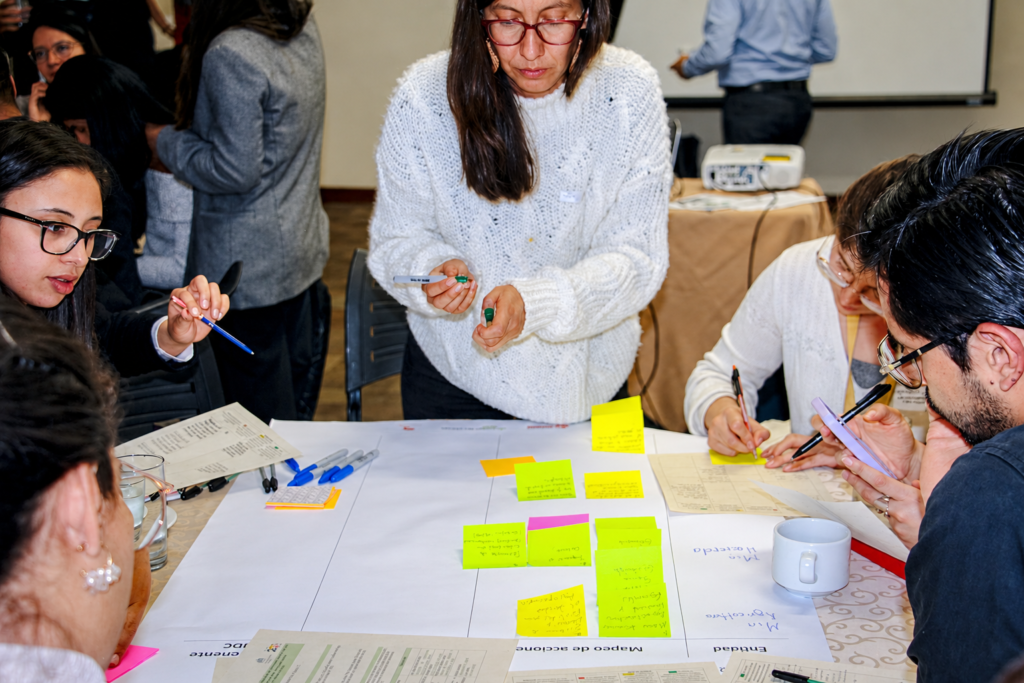
- Stronger social participation: The inclusion of community, academic, and private-sector actors in discussions around NDC 3.0 has been a fundamental step toward ensuring that climate strategies reflect the realities of the country. Expanding these spaces for dialogue has made it possible to incorporate diverse perspectives and strengthen ownership of climate targets across different sectors of society.
Persistent Challenges
Despite this progress, the implementation of Colombia’s NDCs continues to face structural barriers that make effective delivery difficult. Key challenges include:
- Implementation gaps: Many of the measures in the current NDC lack clear implementation and financing plans. Without robust investment and monitoring mechanisms, there is a risk that the NDCs will remain commitments on paper without delivering meaningful emissions reductions.
- Dependence on extractive sectors: Economic dependence on fossil fuels in some regions creates uncertainty around the energy transition. The lack of viable economic alternatives and productive diversification strategies makes it difficult for communities and workers to move toward new development models without experiencing socioeconomic impacts. This is why territorial action must go beyond measuring avoided emissions and actively involve local populations in the development of productive, low-carbon activities.
- Intersectoral coordination: Implementing the NDCs requires more effective coordination among government, the private sector, and civil society. Building a clear structure for climate governance and citizen oversight is essential to prevent actions from becoming fragmented and losing impact at the territorial level.
- Territorial inequality and access to means of implementation: Many vulnerable communities still lack the infrastructure and resources needed to develop territorial initiatives that would allow them to become active participants in a just transition and adapt to the effects of climate change. If climate action does not begin by recognizing the inequalities that already exist in the country, proposed solutions will continue to overlook territories and deepen existing gaps.
For the NDC update to move beyond formal commitments, these objectives must be translated into concrete, coordinated actions supported by strong financing mechanisms. The success of Colombia’s energy transition and climate action will depend on the country’s ability to ensure that these measures are implemented through a territorial approach and generate tangible benefits for the most vulnerable communities and sectors.
At POLEN Transiciones Justas, we reaffirm the urgency of ensuring that Colombia’s NDCs are deeply rooted in principles of social and environmental justice. The energy transition cannot be limited to changing the electricity generation mix. It must become an opportunity to close inequality gaps, strengthen local capacities, and ensure that communities play a leading role in implementing climate action.
We advocate for a sustainable development model in which equity, citizen participation, and respect for human rights are at the heart of climate action. Achieving this will require firm commitments from government, the private sector, and civil society, together with the political will to prioritize structural, long-term solutions.
For more information on the update of Colombia’s NDCs, we recommend consulting the official documents of the Ministry of Environment and Sustainable Development.