
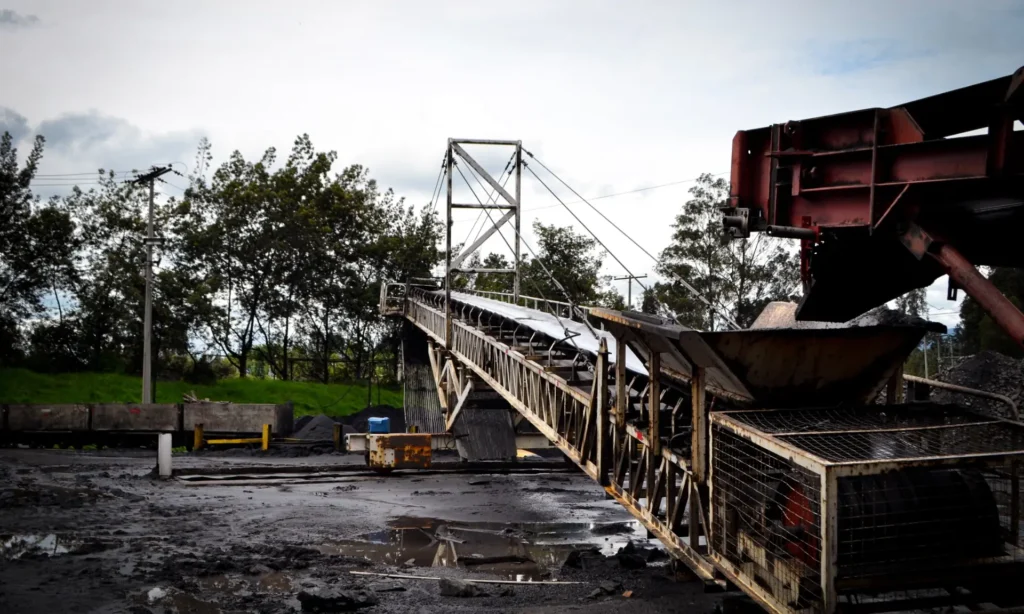
India has imposed a tariff that effectively closes its market to Colombian coke. MRV and methane mitigation are key to avoiding the loss of the European market as well.
Colombian coke loses access to the Indian market: a signal to turn methane management into a competitive advantage
There is little Colombia can do in response to India’s recent tariff.
Preparing for current European regulation, however, is up to the sector.
India has imposed an antidumping tariff that, in practice, removes Colombian coke from its market for five years. The European Union, for different reasons, has already set the rules that will shape coal imports from 2027 onward: companies that cannot demonstrate monitoring, reporting and verification (MRV) of their methane emissions will be left out. The first door was closed by a decision beyond Colombia’s control; the second will remain open only to those who prepare. That is both the difference and the opportunity.
What India decided
India’s Directorate General of Trade Remedies imposed a definitive antidumping duty of US$118.55 per tonne on Colombian low-ash metallurgical coke, effective for five years, as reported by El Colombiano. With benchmark prices ranging from US$225 to US$230 per tonne in 2025, the duty amounts to roughly half the value of the product. This is not a climate measure; it is a trade defense measure adopted by a country seeking to protect its domestic industry from competitively priced Colombian coke.
In 2022, India purchased 678,579 tonnes of Colombian coke, worth more than US$163 million FOB. Between January and July 2025, it remained the second-largest destination for this product, accounting for 10.1% of export value, according to UPME’s Mining in Figures Bulletin.
Responding to European regulation, by contrast, is within our control
Regulation (EU) 2024/1787 requires coal importers, as of May 2025, to report methane emissions associated with coal extraction. From 2027 onward, new contracts will have to demonstrate MRV systems equivalent to those required in the EU, and by 2030 maximum methane intensity values will apply. Although the regulation currently applies to thermal coal, its extension to metallurgical coal cannot be ruled out.
Unlike India’s tariff, these rules have been known years in advance. Whether the sector and the government are prepared to comply with them is therefore within Colombia’s control.
Why coke matters
Coke—metallurgical coal processed in coke ovens and used as an input in the steel industry—is Colombia’s leading industrial export product. In 2024, the country exported 3.9 million tonnes worth US$1.0935 billion FOB.
Colombia is currently the world’s fourth-largest exporter of metallurgical coke, after being overtaken by Indonesia for third place. Between January and July 2025, its main destinations were Brazil (45.1%), India (10.1%), the United Kingdom (9.6%), Belgium (6.9%), and Türkiye (4.7%). According to a Fenalcarbón report, with access to the Indian market now restricted, Europe becomes even more important.
Colombian coke is produced mainly in Boyacá, Cundinamarca, and Norte de Santander, using coal from small- and medium-scale underground mining operations.
Learn more: Nuevas reglas climáticas sacuden las exportaciones de carbón — our article on how European regulation is transforming the market for Colombian coal.
MRV: a market-access requirement and a competitive advantage
For mining companies, MRV should not be seen as just another regulatory burden. It is the key to keeping the European market open and a way to differentiate themselves from competitors that cannot substantiate their emissions data.
Methane accounts for 96% of greenhouse gas emissions from coal mining in Colombia. Yet the mining and energy sector’s MRV system (MRVme) still does not include it, and climate policies do not require mitigation targets. The task remains unfinished, and the 2027 deadline established by European regulation is approaching.
This is not a concept foreign to the sector. The Ministry of Mines and Energy’s own roadmap states that Colombian coal mining will remain competitive if it operates under high environmental standards and responds proactively to new emissions-reduction requirements.
Preparing also brings direct benefits. At POLEN TJ, with support from Hill Consulting, we developed a marginal abatement cost curve based on twelve methane mitigation measures applicable to Colombian coal mining. As summarized in our policy brief, eight of these measures account for more than 70% of the abatement potential, at costs below US$15/tCO2e.
At the same time, these measures reduce the risk of explosions in underground mines, improve air quality, and make it possible to recover methane for energy use. Those who monitor their emissions understand their operations better; those who manage methane will be better positioned to remain in the market.
You may also be interested in: Strengthening the MRV System for Colombia’s Mining Sector — a project with the Climate and Clean Air Coalition (CCAC), the National University of Colombia, and Hill Consulting.
The broader issue
India’s tariff is the result of a trade decision that Colombia cannot control. Being prepared for European regulation, however, does depend on the coal mining sector and its coordination with regulations developed by the government.
Every market that closes makes those that remain open more valuable—and those markets will increasingly demand MRV and methane management. Anticipating these requirements is not simply a cost; it is an investment in protecting the competitiveness of Colombian coal.
For further reading: Monitoring, Reporting and Verification (MRV) of Methane Emissions from Coal Mining and Mitigation Options — the project’s technical guide, as well as the international exchange of experiences on methane monitoring held in 2025.