
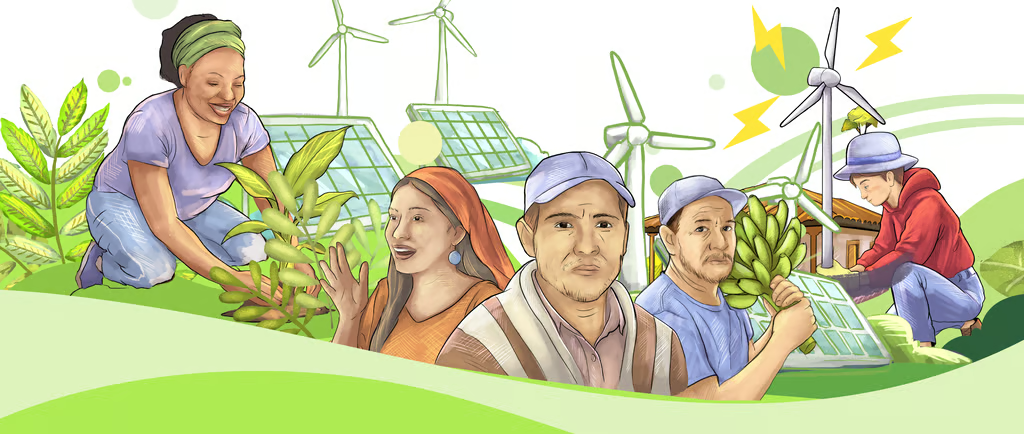
A just energy transition opens up a wide range of economic opportunities for Latin America and the Caribbean. Beyond changing the energy mix, it offers a chance to rethink development models that have shown their limitations, diversify production, create jobs, strengthen territories, and reduce social inequalities.
Taking advantage of these opportunities will depend on adopting public policies, regulations, and investments that drive these changes, as well as on the region’s ability to integrate these solutions structurally into the economy and society, rather than treating them simply as energy substitutes.
A New Economy
Green Industrialization and Structural Transformation
A just energy transition can help move the region from primary-export economies toward more diversified, complex, and higher-value-added economies through the development of sectors such as clean technology manufacturing. This process can stimulate innovation, create new markets, and reduce dependence on imports.
Latin America and the Caribbean currently have a limited share of markets linked to the energy transition, according to the World Bank. A regional industrial policy could accelerate capacity building, strengthen value chains, and foster new low-carbon productive sectors.
Large-Scale Job Creation
Renewable energy is more labor-intensive than fossil fuels. A transition that expands renewable energy and promotes productive diversification could therefore generate more jobs, including opportunities to replace those currently linked to fossil fuels.
Today, the renewable energy sector provides approximately 1.7 million jobs in Latin America and the Caribbean. In addition, decarbonization could create up to 15 million additional jobs by 2030, with positive impacts for young people, women, and territories, according to estimates from the Inter-American Development Bank.
More Stable Economies and More Balanced Territories
Stronger Regional Trade
The energy transition can reduce vulnerability to fluctuations in international fossil fuel prices, improving economic stability. Combined with stronger institutions, logistics, and infrastructure, this could strengthen the region’s trade position, improve balance of payments, and increase its ability to respond to global crises.
Territorial Development
The transition creates an opportunity to reshape territorial development by promoting a more equitable distribution of economic benefits. Investment in infrastructure, access to clean energy, and stronger institutions can help close long-standing subnational gaps across countries in the region.
It can also support economic policy instruments that promote greater territorial convergence and provide mechanisms for responding to economic shocks.
Stronger States and New Economic Foundations
Fiscal Reconfiguration
The energy transition will also transform government revenue sources. On the one hand, it can broaden the tax base through the emergence of new productive sectors. On the other, it raises the possibility of reducing fossil fuel subsidies and strengthening taxation of these activities.
The region has already made progress in this area: since 2016, fossil fuel subsidies have declined significantly as a share of GDP.
Regional Energy Integration
Cooperation among countries to share energy infrastructure can reduce costs, diversify energy mixes, and ensure a more stable supply. Experiences such as Central America’s regional electricity interconnection system demonstrate the potential for moving toward more integrated regional energy markets.
Greater energy integration could generate significant investment savings and strengthen energy security across Latin America.
Better Quality of Life
Reducing Energy Poverty
The energy transition can expand access to energy in remote areas and improve the delivery of essential services such as healthcare and education. It can also reduce health risks associated with the use of polluting fuels in households.
In some countries in the region, a significant share of the population still relies on biomass for cooking, highlighting the potential of the energy transition to improve living conditions, as noted by the Inter-American Development Bank.
Electromobility and Multimodal Transport
Transport is one of the sectors most dependent on fossil fuels. The energy transition creates an opportunity to transform it through cleaner, more efficient systems that are better suited to local and territorial needs.
In Latin America, transport accounts for more than 39% of final energy consumption. Several countries have already made progress in deploying electric buses and other solutions, creating new economic and reindustrialization opportunities.
Transformation with Equity
Transforming the Mining Sector
The energy transition is driving growing demand for critical minerals such as lithium, nickel, and graphite. This represents an opportunity for the region, provided that development prioritizes environmental standards, job creation, meaningful community participation and governance, and stronger national and regional productive linkages.
Demand for these minerals could multiply over the coming decades, according to projections from the International Energy Agency. Countries such as Bolivia, Chile, and Argentina have significant potential in these resources, which could support territorial development if accompanied by appropriate policies.
Closing Gender Gaps
A just energy transition creates opportunities to increase women’s participation in the energy sector, both in employment and in decision-making.
Although women’s participation in renewable energy is higher than in the fossil fuel sector, significant gaps remain. Expanding STEM education and promoting diversity can generate positive economic, social, and environmental outcomes.
The Transition Is Not Only About the Environment
The energy transition is not only an environmental challenge. It is an opportunity to transform the economies of Latin America and the Caribbean, strengthen their institutions, and improve people’s quality of life.